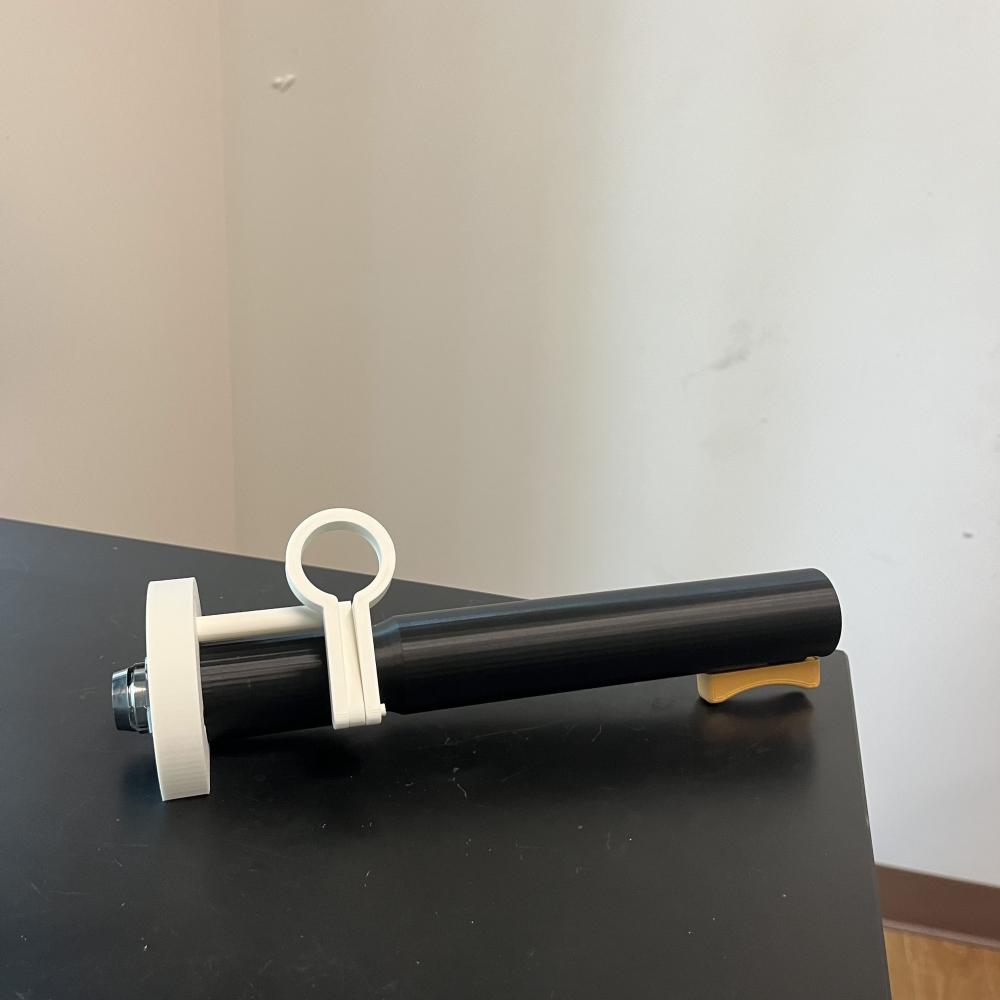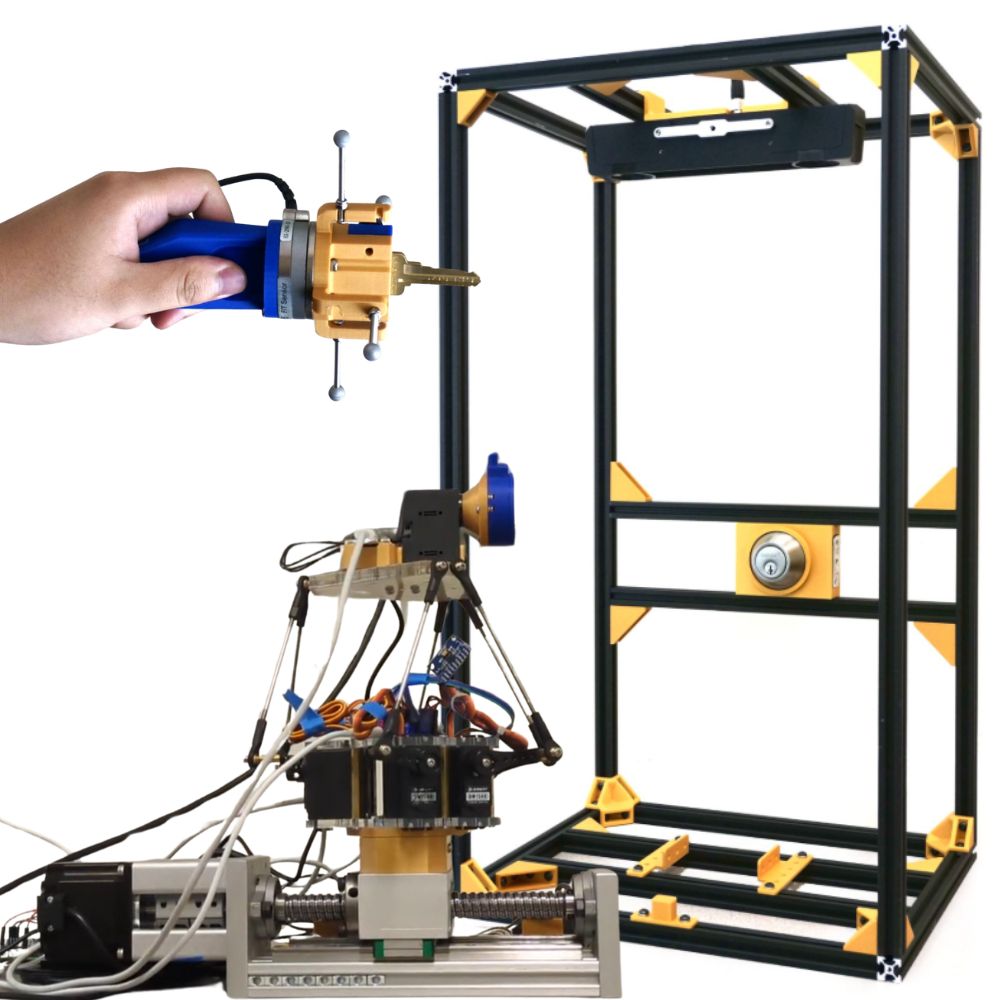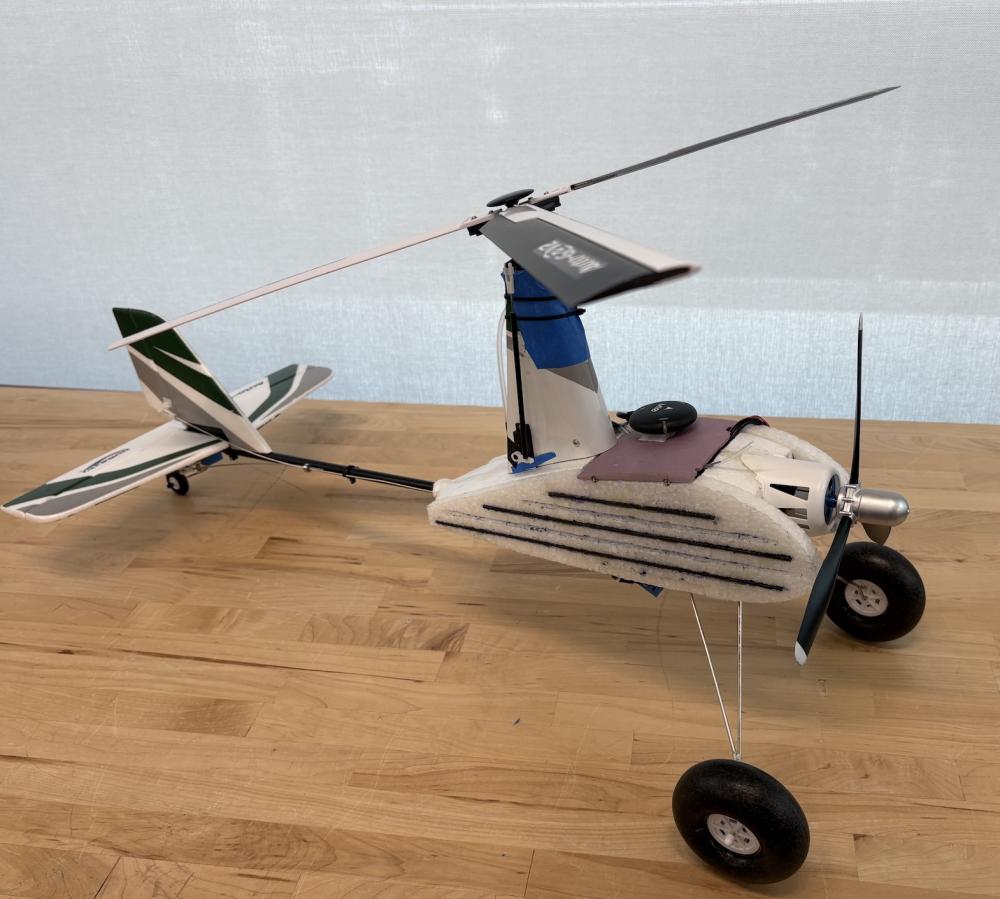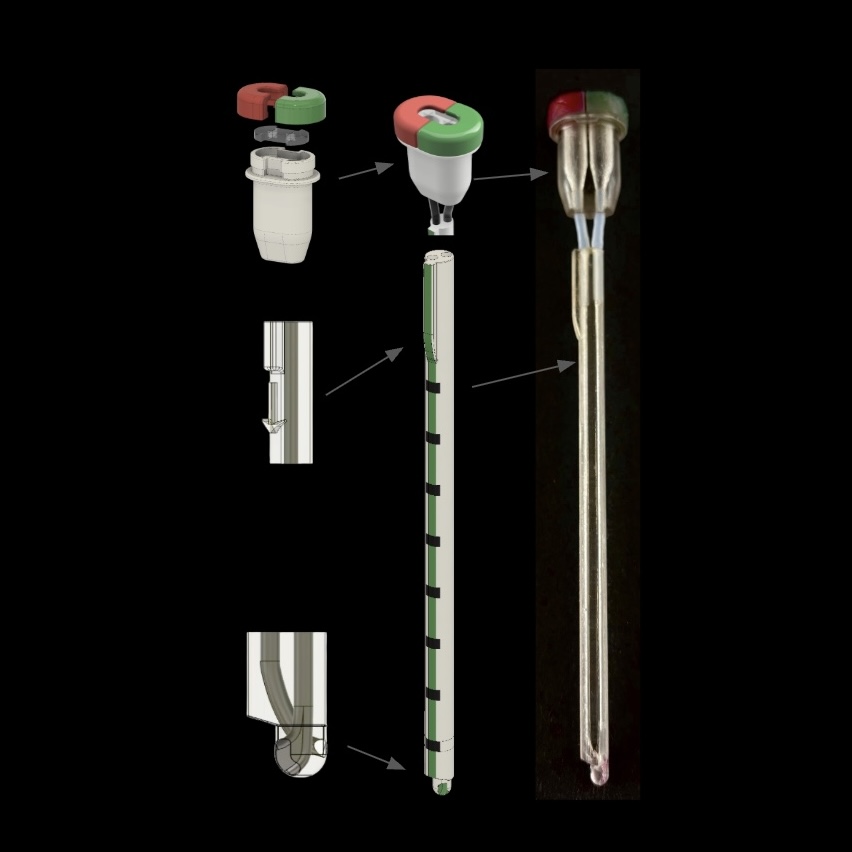
Previous ASME Award Winner

Capstone Design Projects

KickEase Pediatric Swim Trainer

2023-2024 - Winter

Team: 7

Team Members

Lucas Grinius
Andy McDaniel
Malachi Sanders
Hong Suk Suh

Contact Team
The KickEase is a pediatric swim trainer that is worn around the knee, and limits excessive knee flexion in order to promote the development of proper muscle memory for flutter kicking. The final design of the KickEase consists of four major components: a fabric body, restraining hinges, attachment straps and internal grip pads. These components are layered on top one of another and fastened using Chicago screw and snap fasteners.
Front and Rear Views of the KickEase Laid Flat

Precision Jacket for Photoacoustic Imaging

2023-2024 - Winter

Team: 10

Team Members

Hannes Du
Andrew Enmark
Alexander La
Jason Mania

Contact Team
Precision Jacket for Photoacoustic Imaging

Solar Turbines -Turbine Pre-Swirler

2023-2024 - Winter

Team: 4

Team Members

Team Member 1 - Fernando Acuna
Team Member 2 - Jennifer Duong
Team Member 3 - Richard Montalvo
Team Member 4 - Horacio Ramirez-Nunez

Contact Team
Printed Pre-Swirler using Additive Manufacturing (Two Left Images). CAD of entire Pre-Swirler (Right Image)

Development of Cutting Edge Instrumentation for Vision Preserving Surgery

2023-2024 - Winter

Team: 12

Team Members

Hans Chen (www.linkedin.com/in/hans-chen-30b0b6150/)
Joanne Low (www.linkedin.com/in/joanne-low-3b1487205)
Quinn Mullineaux (www.linkedin.com/in/mullineauxq/)
Hanieh Seilsepour (www.linkedin.com/in/hanieh-spr/)

Contact Team
Optic nerve sheath fenestration is a process which requires the surgeon to bluntly dissect through the fat pads in the orbital socket, in order to reach the optic nerve. Once reached, the surgeon can then create a small slit in the optic nerve to release the build up of pressure due to excess fluid. The project's motivation was to reduce the manpower and complexity of this surgical procedure by designing a specialized surgical device to reduce the number of tools required for the operation.
Optic surgical tool designed to retract surrounding fat tissue for optic nerve sheath fenestration

Poseidon's Bidet

2023-2024 - Winter

Team: 9

Team Members

Andy Chacon
Kibo Chen
Evie Gedminas
Adam Walker

Contact Team
A mechanical cleaning prototype for OceanWell, a start-up focused on energy efficient methods of desalination to supply drinking water to water-stressed regions. This device will be used to test methods for cleaning biofouling off of OceanWell's LifeSafe intake filter. It features a linear motion axis, water jets with 3 degrees of freedom, and interchangeable brushes to try out different cleaning methods.
Poseidon's Bidet Image

Autonomous Rail Robot Transportation Network for Spacecraft Servicing and Inspection

2023-2024 - Winter

Team: 1

Team Members

Erik Lovekin
Eesa Khan
Rahul D’Souza
Ali Kattee

Contact Team
Current orbital programs lack the ability to economically and autonomously access all parts of a satellite for servicing and inspection. The proposed system is an autonomous, self-constructing rail system that can reach any Point Of Interest (POI) on a host satellite. Single-function robots perform operations at this location, after which the rail is relocated to access another POI. The system enables failure diagnosis, extends host lifespan, and reduces severity of hardware failure.
3D render of proposed autonomous satellite servicing system in use on a satellite in-orbit. Two rails have been built out, one being utilized by a robotic arm to reach a point of interest on the satellite and service it, and the other one being extended by the assembly robot to another point of interest.

Accessible Enclosure System

2023-2024 - Winter

Team: 5

Team Members

Zach Coopwood
Zachary Fox
Albert Chang
Quynh Nguyen

Contact Team
Team Inspiration is designing an autonomous surface vehicle (ASV) to compete in RobotX 2024 International Maritime Challenge. The team’s 2022 overhead mounting solution faced accessibility and signal interference issues. This project seeks to mount and protect the sensors and electrical components with an undermount solution for increased modularity and accessibility, without compromising structural integrity or water resistance.
Accessible Enclosure System ON a 16' Autonomous Surface Vessel

Gradwell Drive-By-Wire Go-Kart

2023-2024 - Winter

Team: 3

Team Members

Seth Siev
Eddy Rodas-Lima
Samashti Patel
Ziye Liu
Patrick Nguyen

Contact Team
DRIVR is a startup that focuses on the idea that combines the experience of VR and Real life. The driver wears a VR headset while sitting in an actual go-kart and views a simulated course and any inputs from VR are translated to the go-kart.
The project focuses on the mechanical/electrical aspect of the go-kart. The aim was to build a fully electric go-kart that incorporates Drive, Steer, and Brake-by-wire.
Drive-By-Wire Go-kart with the team (around the go-kart) and sponsor (in the go-kart)

NDT- Endovascular Blood Clot Removal Device

2023-2024 - Spring

Team: 18

Team Members

Kayla Tracy
Angel Castellanos
Javier Guerrero
Nianza Delfin

Contact Team
Design and manufacture an endovascular blood clot removal tool that is safe, reliable, and effective, along with a test bed for thorough testing.
Team 18's endovascular blood clot removal tool with a non driven tip

Spaceflight Honeycomb Panel Depressurization

2023-2024 - Spring

Team: 19

Team Members

Emily DeBoer
Emma Fickett
Hailey Griffith

Contact Team
Honeycomb panels are used frequently in aerospace, but trapped air can burst due to rapid depressurization during launch. The cell walls are perforated to allow air flow, but traditional methods for analyzing these perforations are untested and computationally expensive. Our project seeks to experimentally verify theoretical porous resistance coefficients. To collect this data, our project consists of a testing chamber with a variable mounting system and sensors to measure critical values.
Image of Team 19's project. Two aluminum chambers with a honeycomb panel sample in the middle. Flow control is on the right.

Underwater Robot Swarm: A Birch Aquarium Interactive Exhibit

2023-2024 - Spring

Team: 20

Team Members

Peyton Cross
Elliot Myers
Aidan Reedy-Schneider
Guy Walters
Adrian Zugehar

Contact Team
This interactive Birch Aquarium exhibit prototype educates visitors about technologies within the world of underwater imaging, featuring a buoyancy control mechanism and water column profiling sensors. Direct vertical motion is achieved through the robot's dome-shaped canopy capturing bubbles released by guests from the bottom of the tank. Once surfaced, pressure, temperature, and UV light sensors relate the tank conditions to images from across the globe captured by the Jaffe Lab.
A cylindrical underwater robot rises in a tank by catching bubbles released from below. After transmitting data at the surface, guy-wires guide the robot back down to an inductive charging pad.

Syringe Pump for Tissue Expander

2023-2024 - Spring

Team: 23

Team Members

Alex Li
Sahar Shelton
Kyle Li
Riley Smith

Contact Team
A motorized syringe pump that uses a stepper motor with a lead screw to move the plunger of the syringe, all enclosed within a frame. The pump has the option to move forward, backward, and hold position per the user's will. To prevent unintended travel, the limit switch can effectively stop the movement during the procedure, giving the user ample time to change the moving direction. On top of everything, it is 39% less expensive than comparable syringe pumps on the market!
Syringe Pump for Tissue Expander

Wavetank

2023-2024 - Spring

Team: 17

Team Members

Frank Pham
Justin Le
Alexander Yeh
Ian Tom
Hans Millan

Professor Saha is collaborating with Professor Hao on a research focusing on the understanding of small-scale physical processes at the atmosphere–ocean interface. The sponsor’s goal is to obtain a device that produces effective deep water waves that allow for the study of wave-droplet interactions. The designed wave tank has the capacity to consistently generate custom 1-D deep water waves with wavelengths ranging from 5-105 mm, frequency from 4-63 Hz and amplitude from 0-5 mm.
CAD of Wavetank

Random Positioning Machine

2023-2024 - Spring

Team: 26

Team Members

Andrew Copeland
Manuel Figueroa
Nicholas Maekawa
Nicholas Ratto
Vladimir Rubtsov

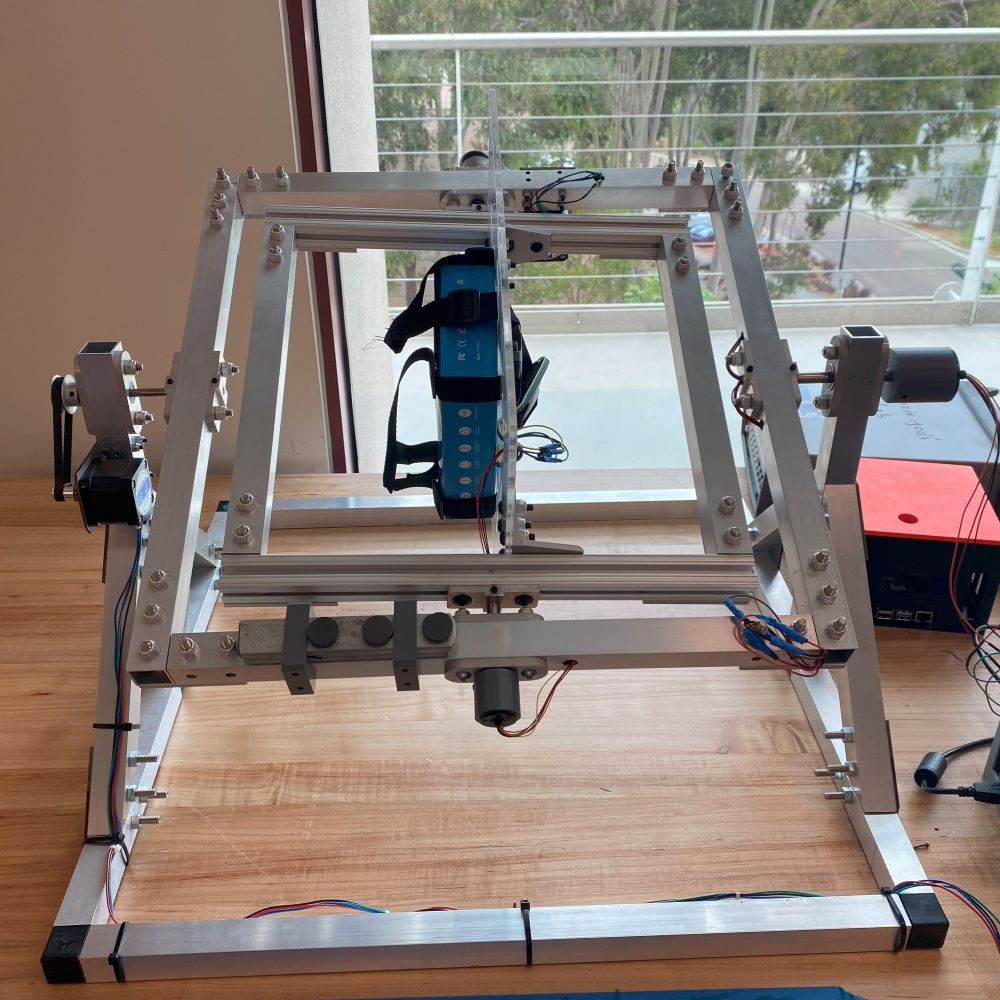
Our sponsor desired a machine capable of reproducing microgravity conditions, necessitating the development of a Random Positioning Machine (RPM). Currently, conducting experiments on biological samples under microgravity requirements is extremely costly and time-consuming. A two-axis nested frame design was developed with fixtures to mount a variety of sample types and achieve an integrated acceleration of 0 m/s^2.
Final design solution of RPM. The design consists of a square nested frame design with an adjustable sample stage mounted in the center. The machine is powered by two stepper motors connected to a pulley system.

Kidney Transplant Pump

2023-2024 - Spring

Team: 16

Team Members

Manuel Abitia
Victor Leung
Ethan Kozberg
Joseph Elhardt
Vivi Nguyen

Contact Team
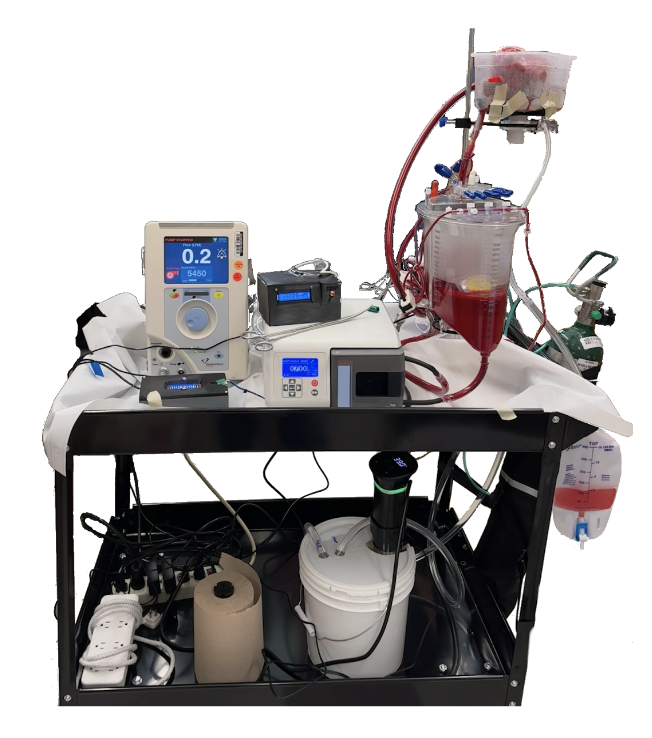
The kidney is placed in a sealed transparent chamber with tubing and blood drainage openings, on a perforated stainless-steel platform for monitoring. Perfusate flows to an external reservoir, recirculating nutrient-rich blood cells via a peristaltic pump, simulating natural blood circulation. An oxygenator mimics lung function, while a heating system maintains temperature. Integrated sensors monitor flow rate and pressure, ensuring conditions meet specifications.
Kidney Transplant Pump Layout

Single-Cell Microfluidic Chip Design and Fabrication

2023-2024 - Spring

Team: 8

Team Members

Conor Archdeacon
Theo Emery
Wesley Huszarik
Spencer Martin
Trevor Matthews

Contact Team
Microfluidics devices were designed and fabricated to study single cell interactions between coccidioidomycosis and neutrophil at large scales. High efficiency rates were reported, providing valuable data driven insight towards developing cost effective research tools and treatments for Valley Fever. Cell immobilization techniques were considered for extended time scale imaging.
A microfluidic chip shown as visible to the naked eye, and as seen with fluorescent microscopy imaging.

Genetically Modified Mosquito Incubation Box

2023-2024 - Spring

Team: 13

Team Members

Emily Inthavong
Emily Weiner
Keileina Honda
Matthew Amankonah
Samantha Stampfl

Contact Team
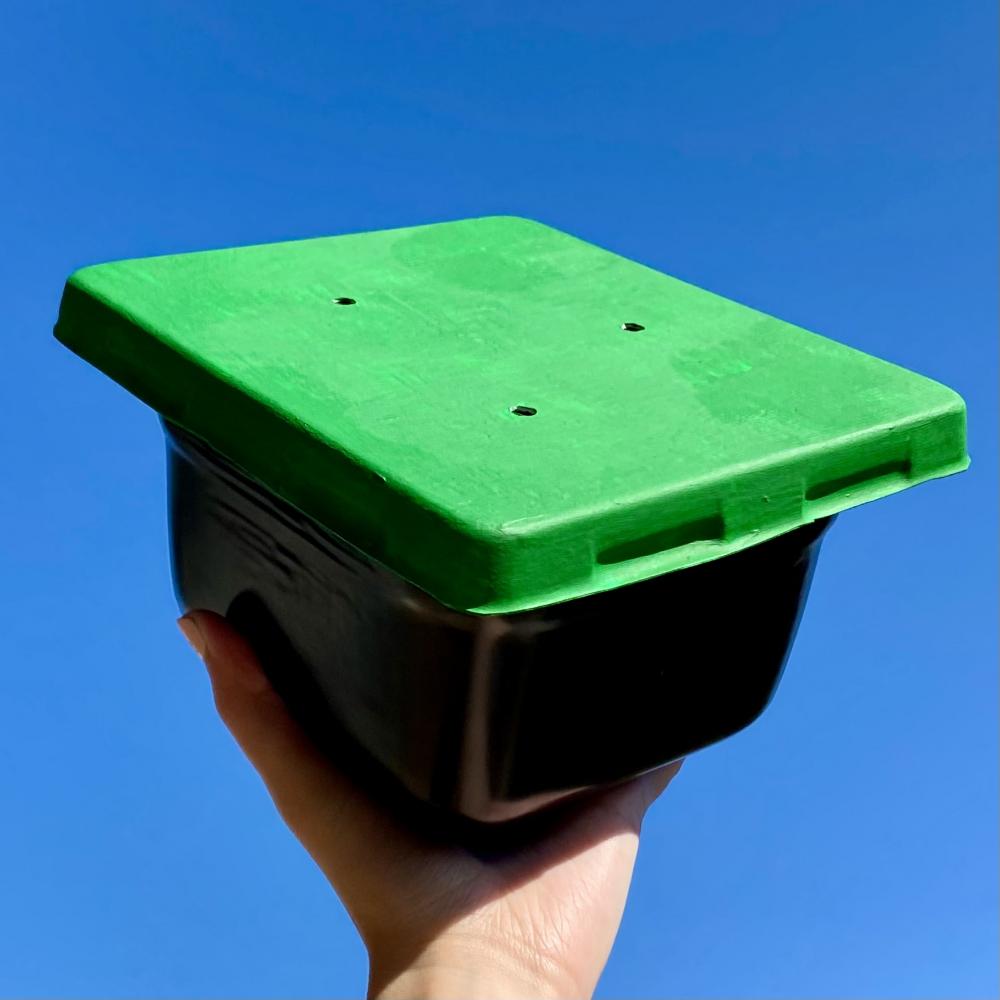
The goal of this project is to create a mosquito suppression box that allows for the development of genetically modified mosquito eggs so that the sterile male mosquitoes can easily exit the box while the flightless female mosquitoes are contained.
Black square plastic container with green lid

Endotracheal Tube Support Clip

2023-2024 - Spring

Team: 14

Team Members

Jusung Park
Maria Resendiz-Cruz
Michael Usherenko
Madison Whiteman
Brian Yi

Contact Team
The Endotracheal Tube Support Clip is an innovative medical device used to reduce the probability and severity of throat injuries during intubation.
Image of Finalized Endotracheal Tube Support Clip

Ultrafast Subpixel Resolution Enhancement

2023-2024 - Spring

Team: 3

Team Members

Steven Garcia
Alexander Parrish
Hsi-Ruei Tsao
Alexander Turovskiy

Contact Team
Image enhancing techniques such as structured illumination microscopy and subpixel resolution enhancement (SRE) are able to drastically increase the resolution of image sampling devices, allowing cameras to surpass the diffraction limit of light or simply increase sensor resolution. This project aimed to apply these techniques to high-speed imaging, or "slow-mo" video. The system was able to continuously move a grating and control its position within ±2.5 µm of the setpoint.
Team 3 senior design project hardware showing a metal plate, ball screw, 3D printed grating housing, and motor.

Project Tortas: Flattened Duct for Engine Build-Up

2023-2024 - Spring

Team: 28

Team Members

Daniel Na
Daniel Nguyen
Joseph Edjan
Tammy La

Contact Team
Collins Aerospace, a subsidiary of Raytheon Technologies, specializes in designing and servicing systems for various aircraft. To enhance the efficiency of turbojet engines, they are focusing on investigating the feasibility of flattening air ducts to route through tight spaces more effectively. The final deliverable is a sensitivity study of the factors that contribute to maintaining the original duct's characteristics while fitting within certain boundaries to support the sponsor's decisions.
Photo of Assembled Test Setup with Oval Duct and Electronics

Mechanoluminescent Material

2023-2024 - Spring

Team: 25

Team Members

Kate Cone
Ted Fukami
Max Go
Bennett Manalo

Contact Team
Zinc Sulfide (ZnS) in a silicone base yields an elastomer with mechanoluminescent properties. This means that when it experiences stress, the material emits light! We wanted to use this special property to create a proof of concept application for alternatives to battery-powered light-up products.
Mechanoluminescent Bike Tire Design

Enclosed Cell Stretcher

2023-2024 - Spring

Team: 2

Team Members

Carla Mae Alarcio
Zachary Bohedba
Sam Ford
Logan Lavine
Hayden Tankersley

Contact Team
Professor Geno Pawlak and the Experimental Biofluidics Lab are studying the genetic expression of biological cells under three biomechanical forces (pressure, shear stress, and cyclic stretching) in order to develop pharmaceuticals that can help manage Pulmonary Arterial Hypertension. The enclosed cell stretcher prototype is able to apply all 3 forces simultaneously, inducing flow and pressure across a cell membrane while also cyclically stretching it.
Enclosed Cell Stretcher Final CAD Assembly

Thrust Vector Control Module for a Rocket Engine

2023-2024 - Spring

Team: 32

Team Members

Omeed Shahhosseini
Setekh Karaismailoglu
Claire Wang
Georgia Prewitt

The goal of this project is to develop a thrust vector control module that can rotate a rocket engine to guide the sponsor’s Riptide vehicle in the desired directions. The module has to allow 7° radius gimbaling from the central axis of the Nephas engine, withstand 2000 lbf thrust force for 15 seconds while drawing a circle, and use the two linear actuators provided by sponsor.
Photo of thrust vector control module mounted on a PLA engine

Hybrid Kapitza Pendulum

2023-2024 - Spring

Team: 1

Team Members

Eric Leung
Karthik Srinivasan
Joseph Pallan
Imam Jahan
Andy Vu

Contact Team
The team implemented closed loop control for a Kapitza's pendulum using feedback from a capacitive encoder to create the world's first globally stable Kapitza's pendulum using hybrid dynamical control theory. Thus, the pendulum was capable of stabilizing in the inverted position regardless of its starting point.
Visual of Kapitza pendulum and associated components.

BronchoMate

2023-2024 - Spring

Team: 9

Team Members

Chaewon Kim
Ryan Lumaban
Jaden Mcdonald Peltier Yu
Rushil Narain
Alondra Pureco

Contact Team
Intubation often requires both laryngoscopes and bronchoscopes. However, video laryngoscopes require separate equipment and their own monitor. With limited space in the operation room, an additional monitor for the laryngoscope can reduce efficiency. To increase procedural efficiency during intubation procedures, our team has created the BronchoMate to replace the need for a laryngoscope and provide a more cost effective and versatile solution.
The BronchoMate modeled in Formlabs Clear, White, and Grey resin material.

Dynamic Stabilization System For Marine Optical Equipment

2023-2024 - Spring

Team: 5

Team Members

Evan Graham
Judy Mohamad
Noah Nafarrete
Sosuke Kojima
Sankalp Kaushik

Contact Team
DeepWater Exploration (DWE) designs camera hardware and complementary machine learning algorithms to improve the quality of their hardware in the marine environment. The objective of this project is to develop a mechanism capable of stabilizing the footage from DWE cameras with the capability for DWE to implement their own control algorithms. The final design for this project consists of a 3-axis gimbal and z-axis stabilizer to compensate for angular and vertical disturbances.
Final Design of Dynamic Stabilization System For Marine Optical Equipment

Haptic Shoulder for Physical Human Robot Interaction

2023-2024 - Spring

Team: 22

Team Members

Calvin Joyce
Isabella Fiorini
Rizzi Galibut
Roger Nguyen
Tarun Murugesan

ARCLab investigates advancements in search and rescue operations with robotics. Our project focuses on the physical human-robot interaction needed for casualty extraction. We developed the Shoulder Haptic Universal Limb Dynamic Repositioning Device (SHULDRD) to train a robotic manipulator to safely perform upper arm repositioning. The SHULDRD simulates human shoulder motion and applies resistive forces for safe casualty manipulation, enhancing efficiency and safety in disaster response.
SHULDR Device assembeled with torso and arm

The Grounded Conductive Shield for the Radio Frequency Plasma Source

2023-2024 - Spring

Team: 6

Team Members

Team Member 1 - Haochen Bai
Team Member 2 - Julissa Villalobos Valencia
Team Member 3 - Xiran Wang
Team Member 4 - Ziguang Zhu

Contact Team
This MAE 156AB project will redesign the grounded electrically conducting shield around the antenna for easy removal and replacement, ensuring it maintains effective radio frequency (RF) shielding of 13.56 MHz, so sensors can operate efficiently during experiments.
The four components assembled together for the radio frequency aluminum shield.

CRANE 3 - An 8-Axis Robot for Lung Biopsies within CT Scanners

2023-2024 - Spring

Team: 27

Team Members

Arjun Naageshwaran
Muhammand Bintang Gemilang
Brian Fader
Steven Molotnikov

Contact Team
An 8-Axis Robot for Lung Biopsies within CT Scanners
CRANE v1 prototype performing needle emplacement on a surgical dummy within the bore of a CT scanner

Pogo Pin Inspection Automation

2023-2024 - Winter

Team: 2

Team Members

Dehao Lin
Daniel Acosta
Tommy Jin
Igli Alivoda

Contact Team
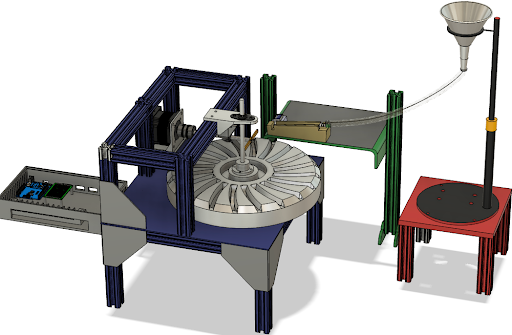
This project aims to develop a proof of concept to enhance the efficiency and scalability of pogo pin inspections through automation. The team has designed a four-stage system that includes a vibratory bowl feeder, a conveyor belt, a force test module, and a visual inspection module. This system demonstrates that automating the sorting and inspection of pogo pins is a viable solution.
The assembled automating system consists of a vibratory bowl feeder subsystem, a conveyor belt subsystem, a force test module, and a visual inspection module.