Previous ASME Award Winner

Capstone Design Projects

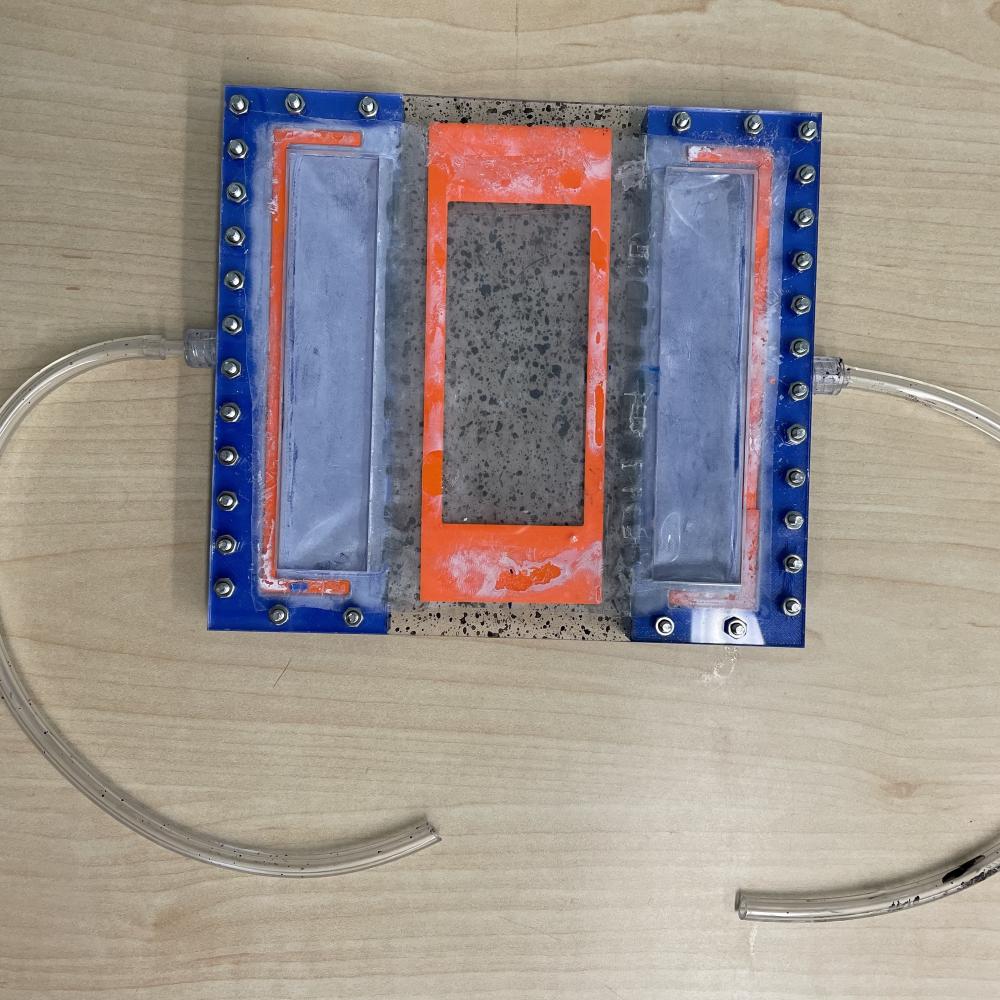
Portable TEC-Based Liquid Cooling Garment

2024-2025 - Spring

Team: 30

Team Members

Aaron Lo
Morgan Laney
Fatima Rivera
Karla Ramirez

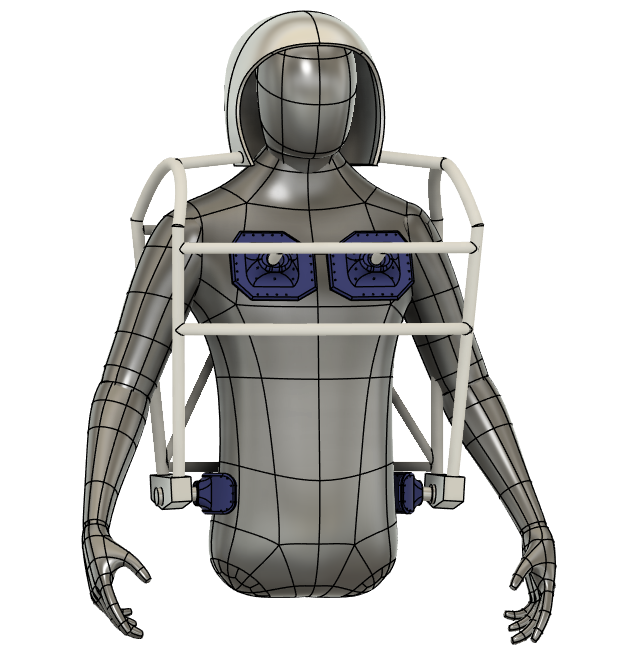
The rise of extreme heat events from global warming drives an increase in the need for personal cooling technologies. The Portable Thermoelectric Device (TEC) Based Liquid Cooling Garment project aimed to create a lightweight and flexible solution for individuals exposed to extreme heat environments. The system features flexible tubing that delivers cool water circulation from the TEC and heatsink units, user customizability at 3 cooling levels, and is battery-powered.
Portable TEC-Based Liquid Cooling Garment

UCSD Med Nerve to Smile

2024-2025 - Spring

Team: 13

Team Members

Daniel Akhondi
Andrew Ho
Cora Nordheim
Natalie Ratzlaff

Contact Team
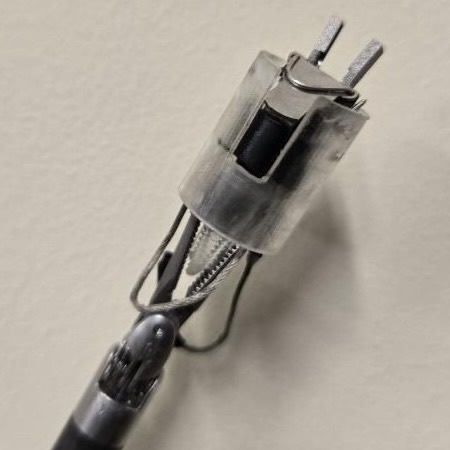
The project sought to design a device in the hopes of optimizing and streamlining facial nerve repair. The first deliverable is to develop a biocompatible brace that clamps onto two separated facial nerves. The second deliverable is a test bed designed to evaluate the strength, stress, and strain of nerve analogs.
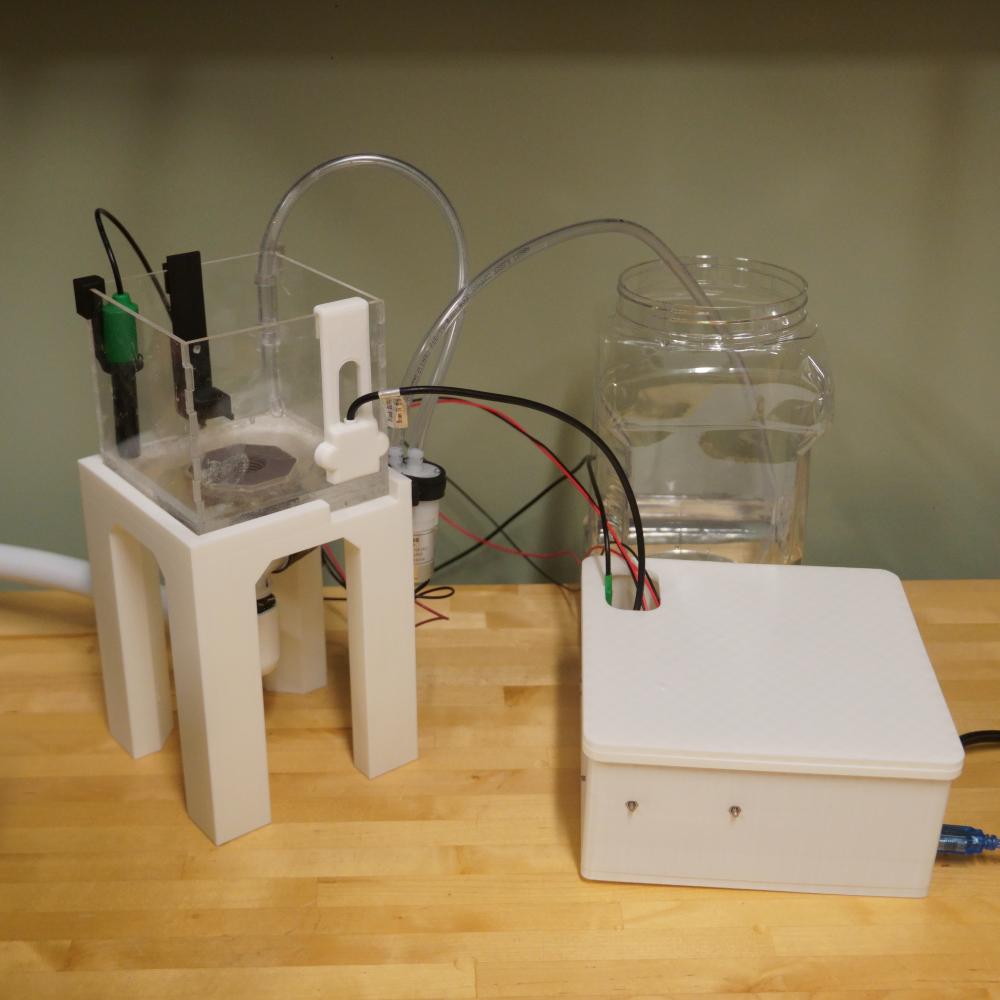
Nerve to Smile Test Bed

UCSD Med Absorbable Springs

2024-2025 - Spring

Team: 12

Team Members

Ella Arendes
Sara Jodayri Ali Ashrafi
Elizabeth Quinlan
Vera Wong

Contact Team
Craniosynostosis is a condition in which an infant’s skull sutures fuse prematurely, restricting brain growth and causing developmental complications. A current treatment is spring-assisted cranioplasty which involves implanting metal springs to gradually reshape the skull. However, these springs require a second surgery for removal, increasing risks and medical costs for patients. Our project aims to develop bioabsorbable cranial springs that eliminate the need for an additional procedure.
Absorbable Springs

SE Scribing Solar Panels

2024-2025 - Spring

Team: 11

Team Members

Charlie Lahey
Evan K Gibson
Ava Roethe
Hunter Duzen
Param Shah

Contact Team
GAUSS (Gantry for Automated Ultrathin Solar Scribing) is a system designed to enhance the Solar Energy Innovation Laboratory's (SOLEIL) ability to manufacture perovskite solar cells in-house. Scribing is critical for forming electrical connections and boosting module efficiency. GAUSS offers a low-cost mechanical alternative to laser scribing, using a CNC gantry with force-feedback control to selectively scribe through each layer of a perovskite cell.
Gantry for Automated Ultrathin Solar Scribing

Hi Tech Honeycomb Automation

2024-2025 - Spring

Team: 10

Team Members

Rohan Shah
Sophia Davila
Lucca Frey
Parth Jha

Contact Team
Developed in collaboration with Hi Tech Honeycomb, this project automates the tack welding of aerospace honeycomb rings—a process currently done manually that is slow, repetitive, and physically demanding. Our modular multi-tip resistance welding system improves speed, consistency, and operator comfort without compromising critical weld quality. With custom welding heads, an alignment table, and foot-pedal actuation, we validated the concept through a dual-tip prototype ready for automation.
Welding Automation System

GA Autoloader Recovery Fusion

2024-2025 - Spring

Team: 9

Team Members

Ravi Harun
Colby Hettinger
Rayyan Khalid
Tanmay Prakash
Julian Rami

Contact Team
The Autoloader system is a mechanical staging to automate fueling and dispensation of inertial fusion energy target capsules. From a batch of IFE target shells, it stages them to be doped with liquid hydrogen fuel and be individually conveyed towards a reactor at a cycle rate of 0.25 Hz.
Autoloader

DM Consulting - Dry Dock Block

2024-2025 - Spring

Team: 8

Team Members

Liem Le
Emilio Nesrala
Cedric Shaw
Luka Zhkenti

Contact Team
This project develops an automated real time alignment indicator that guides dockmasters to achieving a half inch tolerance laterally when docking a ship. A rotating contact beam sensor mounts to dry dock blocks and deploys under the floating ship. Inclinometers on both beams measure angular deflection from contact with keel, a microcontroller computes the ship’s lateral offset and displays the offset on a screen. The offset is further wirelessly transmitted to handheld devices
Dry Dock Block

Automating the Cutting Process Hi-Tech Honeycomb

2024-2025 - Spring

Team: 38

Team Members

Rowan Barg
Micah Borg
Elijah Matthews
Daniel Sun

Automated metallic Honeycomb processing machine; with a custom clamping and fixture assembly mounted to precise, motorized translation and rotation stages. The two degrees of freedom provided by these stages allow for rapid, automated positioning of the stock beneath a cutting tool.
Automated honeycomb cutting prototype

Cellxercise Machine

2024-2025 - Spring

Team: 2

Team Members

Alexander Haken
Kaustubh Kanagalekar
Justin Dang
Jason Liu
Sheen Shaji

Contact Team
The cellxercise machine was created to aid in the culturing of artificial tendon and meniscus tissue. It can apply cyclic stresses to these tissues while they are nourished by a nutrient solution in the petri dish and warmed in an incubator. The plate with the petri dish can be easily separated from the linear actuator, and moved to a fume hood for nutrient solution changes.
A image of a cell stretching machine. The machine has a sliding gantry with clamps sticking into a petri dish from above.

Design and Analysis of a Mode-Transitioning Robotic Leg and Test Bed for a Hexapod Rescue Robot

2024-2025 - Spring

Team: 37

Team Members

William Harris
Lucas Yager
Giovanni Bernal Ramirez
Hwuiyun Park
Elias Smith

Contact Team
As ARCLab works to create a legged robotic rescue platform for extracting casualties, a leg mechanism capable of transforming between a high speed mode to reach the casualty and high force mode to drag the casualty to safety needed to be developed. This project focuses on augmenting the lengths of a five bar linkage leg in order to change the mechanical advantage of the leg.
5-bar linkage leg mounted on test bed.

Kinetic Craft Center Sign

2024-2025 - Spring

Team: 6

Team Members

Aidan Gleason
Yari Armand
Emily Huang
Hanson Huang

Contact Team
The UCSD Craft Center offers a wide range of hands-on creative workshops, yet many students are unaware of its presence and offerings. To address this visibility challenge, a dynamic and interactive sign was developed to capture attention and promote engagement. The final design features light carts that move in the shape of the word "CRAFT" to produde the illusion that light is flowing through the sign. Layered acrylic and poured epoxy resin produce the front facing lettering of the sign.
Craft Center sign team members and sponsor in front of the sign they built.

Lifesaver Project Rover Module

2024-2025 - Spring

Team: 39

Team Members

Daniel Scuba
Tin Nguyen
Aditya Singh

Contact Team
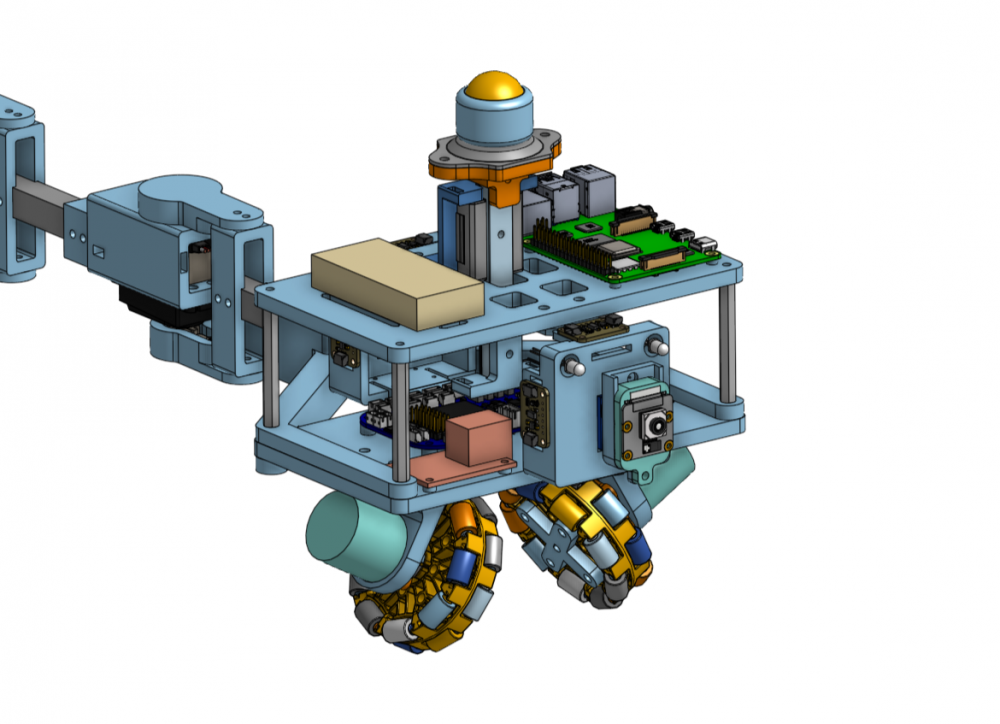
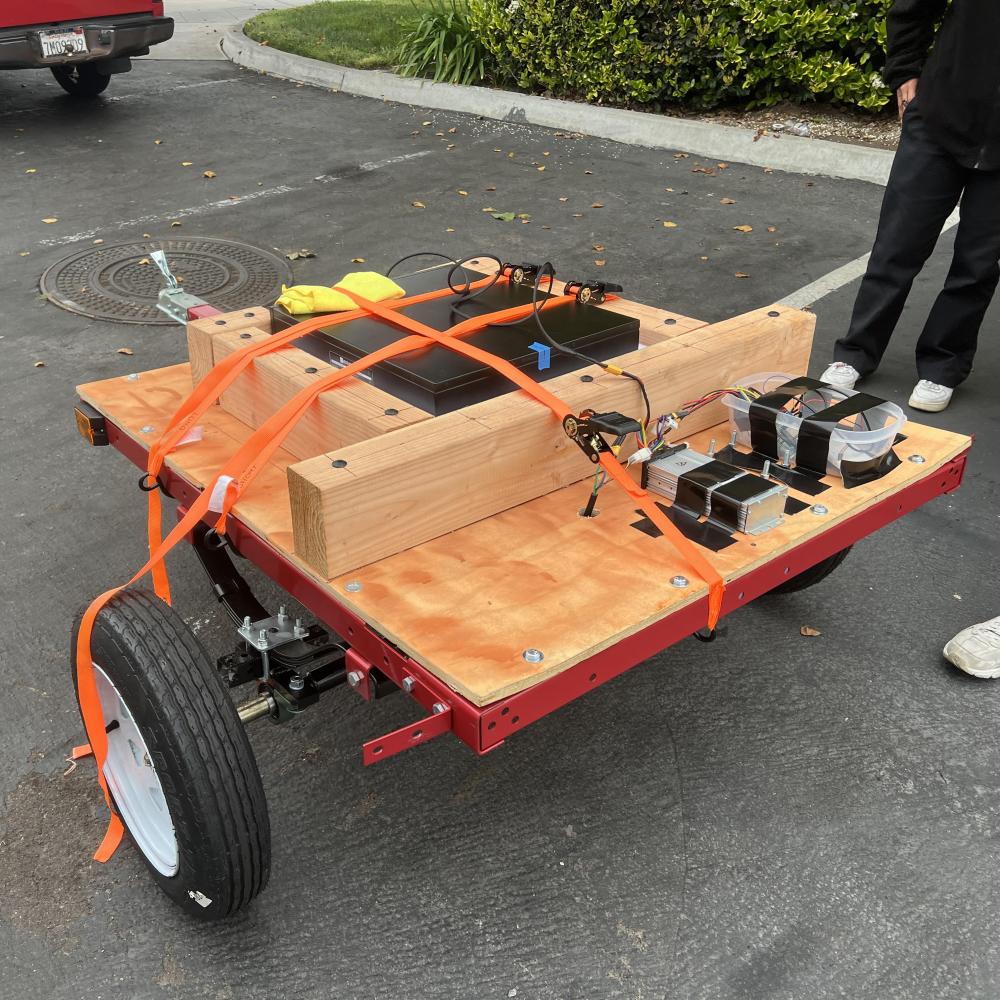
The Lifesaver Project redefines traditional healthcare infrastructure by miniaturizing essential medical equipment into a portable pod capable of being deployed in diverse environments. Our team developed a remote operated rover base to traverse uneven terrain to carry the lifesaver pod to its patients.
Rover Base

ATA Shock Test Table Firing Mechanism

2024-2025 - Spring

Team: 1

Team Members

Manu Mittal
Nina Abraham
Marco Rincon Villanueva
Anne Marlow
Reggie Estrella

Contact Team
ATA Engineering aimed to develop a shock test table to validate shock analysis. The goal was to build a pneumatic firing mechanism that consistently produces accurate shock events. It launches a 1–3 kg mass at 6–13 m/s using compressed air from a tank released by a solenoid valve. A second valve vents the barrel shortly after to prevent secondary impacts. The system reliably drives the projectile into the table at the target velocity.
Image of completed firing mechanism, with labeled component CAD view

Improved Punch Biopsy Tool

2024-2025 - Spring

Team: 35

Team Members

Alex Corrow
Kenny Huh
Andreas Kuan
Allen Wu

Contact Team
A punch biopsy is a common procedure where providers excise a small column of tissue to be submitted for examination and analysis. However, current punch biopsy procedure requires three tools and often an additional assistant. This slows the workflow, increases patient discomfort and risk of suboptimal specimen sampling. This project aims to improve the punch biopsy tool by designing an all-in-one device that enables a single user to perform the procedure seamlessly.
250% up-scaled prototype hardware

Unlocking the Door with AI

2024-2025 - Spring

Team: 40

Team Members

Marfred Barrera
Kerseyleanne Catolos
Rachel Hartanto
Johnny Li

Contact Team
Developments in artificial intelligence (AI) and learning in robotics have opened possibilities for a “key-in-lock” challenge, an advanced version of the “peg-in-hole” challenge. The team was assigned the objective of developing a testbed capable of gathering data on the positions, orientations, forces, and torques involved in opening a lock with a key, to progress towards the goal of AI with Robot Programming by Human Demonstration (RPHD) to solve complex problems and perform difficult tasks.
On the left we have a hand holding the Sensor Handle and on the bottom left is the Robotic Arm. These two systems will interact with the testbed on the right.

Cohu Temperature Gradient Tester

2024-2025 - Spring

Team: 36

Team Members

Pratham Joshi
Ryan Omori
Omar Perez
Onipaa Pung
Nikita Valajev

Contact Team
Cohu Inc., one of the nation's leading manufacturers of post-processing machines, plays a critical role in the semiconductor testing process. This project created a hands-free surface temperature gradient measurement tool using MLX90614-BCI sensors.
Temperature gradient image developed for sponsor's use

Autogyro UAV

2024-2025 - Spring

Team: 22

Team Members

Pranav Sakhuja
Aaditya Shivadey
Ruochen Li
Arham Nawaf

Contact Team
The project was aimed at developing a surveillance-capable autogyro UAV by modifying a hobbyist platform to support live video streaming, manual RC control, and basic autonomous compatibility using a flight controller, GPS, and telemetry system—laying the groundwork for future fully autonomous missions and advanced monitoring features like shark detection.
Autogyro UAV

Bidirectional Guide for Treatment of Peripheral Artery Disease

2024-2025 - Spring

Team: 21

Team Members

Talia Perez
Clayton Hoxworth
Ananely Alanso Baxter
Natalie Farmer

Contact Team
Peripheral arterial disease (PAD) often necessitates surgeons to perform procedures in two directions, which traditionally requires a second incision, as current tools are unidirectional. We developed the Bidirectional Guide, a single-use transition accessory for vascular tools, which enables the insertion of a second guidewire in the opposite direction in the artery through the original point of entry after initial treatment.
CAD image of the Bidirectional Guide beside image of final prototype

Cell Stretcher 2.0

2024-2025 - Spring

Team: 29
Team Members

Shane Browne
Anna My Nguyen
Nabihah Chaudhry
Filippos Serpieris

Contact Team
This project aimed to create a device that could apply three mechanical stressors (shear, normal, and stretching) to cultured endothelial cells in a decoupled manner, with the ultimate goal of quantifying their effects on genetic expression to better understand Pulmonary Arterial Hypertension.
Top view of the final design.

Materials Break Up

2024-2025 - Spring

Team: 16

Team Members

Marianne Jo
Tomas Taboada
Curren Unruh
Max Zamorano

Contact Team
Genentech, Inc. has a process that breaks down medicinal powder and processes them through their pipes to be able to create drugs. These powders are delivered in sealed bags that can clog processing pipes. This project aims to develop an automated, sanitary, and safe solution for filtering out and breaking down clumps that form due to moisture exposure. It is made up of three parts: the mechanical frame, the motorized mechanism that targets clumps in the neck of the bag, and a filtering clip.
Automated Mechanical Frame Holding Up Bag With Clip

Resistive Torque Measurement Apparatus

2024-2025 - Spring

Team: 24

Team Members

Emily Brown
Hrag Ekmekjian
Dylan McCulloch
Richard Vallejo Jr

Contact Team
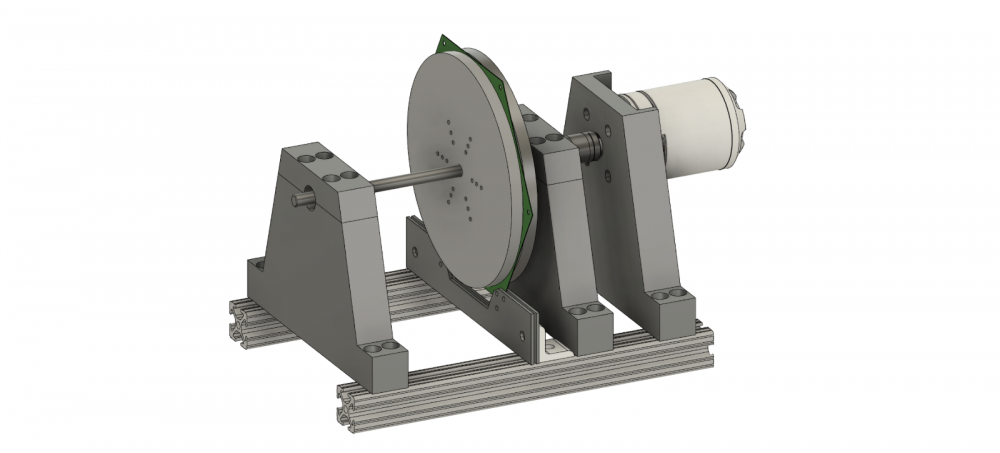
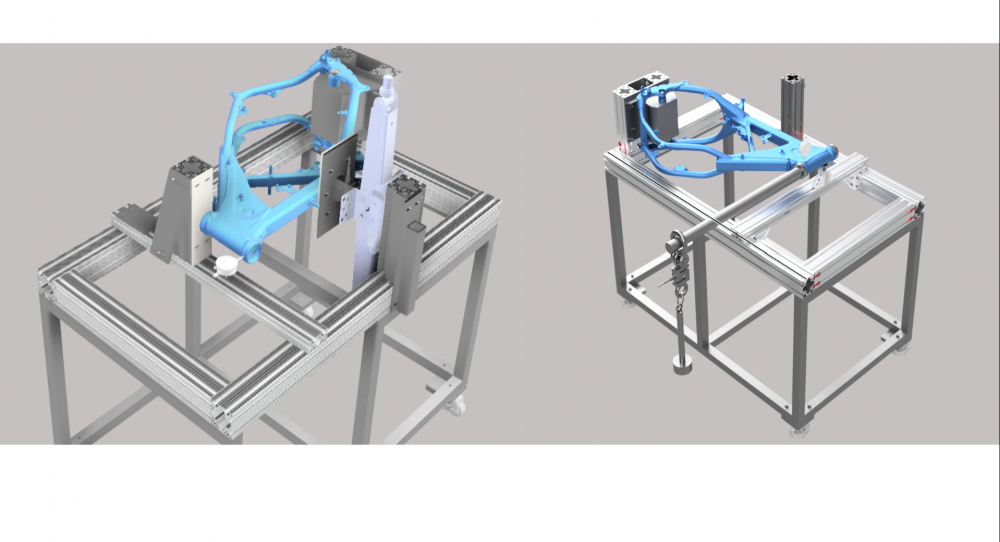
Sponsored by the Office of Naval Research and UC San Diego, this project developed the Resistive Torque Measurement Apparatus (RTMA) to support research on robotic movement through granular media. The RTMA measures resistive torque on a rotating intruder submerged in granular media with varying conditions. Designed for field use, it enables efficient data collection to inform the design of bio-inspired robots navigating complex granular environments.
Resistive Torque Measurement Apparatus at La Jolla Shores Beach

NIWC PAC UAS Launch and Recovery

2024-2025 - Spring

Team: 26

Team Members

Parker Amano
Gregory Garner
Gabriel Lepage
Bhodivista Yohn

This project developed four subsystems for NIWC PAC to support modular, low-cost drone platforms: a rugged transport case, a compact ground control station, a pneumatic fixed-wing launcher, and a recovery net. Three prototypes were built; the recovery net was delivered as a design package. These systems enhance drone deployment, control, and recovery, aligning with NIWC’s shift toward agile, unmanned solutions and away from costly, proprietary technologies.
Final Deliverables. From top left: Multirotor UAS Transport Case, Ground Control Station, Pneumatic UAS Launcher, Recovery Net.

StableWind Technologies

2024-2025 - Spring

Team: 17

Team Members

Wills Moore
Christopher Mansfield-Reid
Trevor Marshall
Christopher Cordano
Jintong Han

Contact Team
Stable Wind Technologies developed a self-stabilizing platform for floating offshore wind turbines that actively adjusts buoyancy in real time to counteract wind-induced tilt. This system functions as a cost-effective, prototypical testbed and research tool to enable the development of control schemes for at-scale floating platforms. Over 15 weeks, our team successfully designed, manufactured, and tested our system in both static and active environmental conditions.
Underwater photo of our system during dynamic testing.

Wave Energy Converter

2024-2025 - Spring

Team: 25

Team Members

Jayen Bhakta
Alex Bussey
Elizabeth Kinsella
Rhea Patel
Kelsey Racette

Contact Team
UCSD's Environmental Fluid Dynamics Lab is working to develop a small scale wave energy converter. The objective of this project was to research, fabricate, test, and analyze a more robust buoy-heave plate system, equipped with sensors to collect relevant data such as surface position, pressure, and geographical location in order for the sponsors to validate their current computer model of the system.
CAD model of Wave Energy Converter system, comprised of a buoy connected via tether down to the heave plate.

Scripps Anemometer Drone

2024-2025 - Spring

Team: 41

Team Members

Julia Lee
Eric Limonadi
Bridget McNamara
Cindy Tran

Contact Team
This project is sponsored by Dr. Jooil Kim of Scripps Institution of Oceanography, and involves mounting an anemometer on a drone to use wind speed and direction data recorded by the anemometer to determine ideal locations for air sampling in low altitudes to track greenhouse gas emissions. The final design is made of a carbon fiber and 3D printed ASA mount, air sensors, LoRa modules to transmit data live, and software to log the data to a raspberry pi, and display the data on a ground computer.
Final CAD of drone system with anemometer mount and electronics box, labeled parts

Heating Stage for Nanomaterials

2024-2025 - Spring

Team: 28

Team Members

Duy Cao
Gautam Ganesh
Alice Khalil
Johnny Mendoza

The Sailor Lab tasked the MAE 156B team with redeveloping a compact, intuitive heating stage that could enable fast, reliable recovery from silicon quantum dot blinking and support accurate, repeatable optical measurements. The stage design was composed of three main components: a heating and cooling element, a chamber to house the sample and heater, and a linear X-Y Positioning Stage to control and position the spectrometer in order to took readings of silicon quantum dot samples.
Heating Stage for Nanomaterials Apparatus Final Set-Up

Device to Assess Nitric Oxide at PoC

2024-2025 - Spring

Team: 20

Team Members

Fernando Rico
Li-Pin Chang
Armaan Goklani

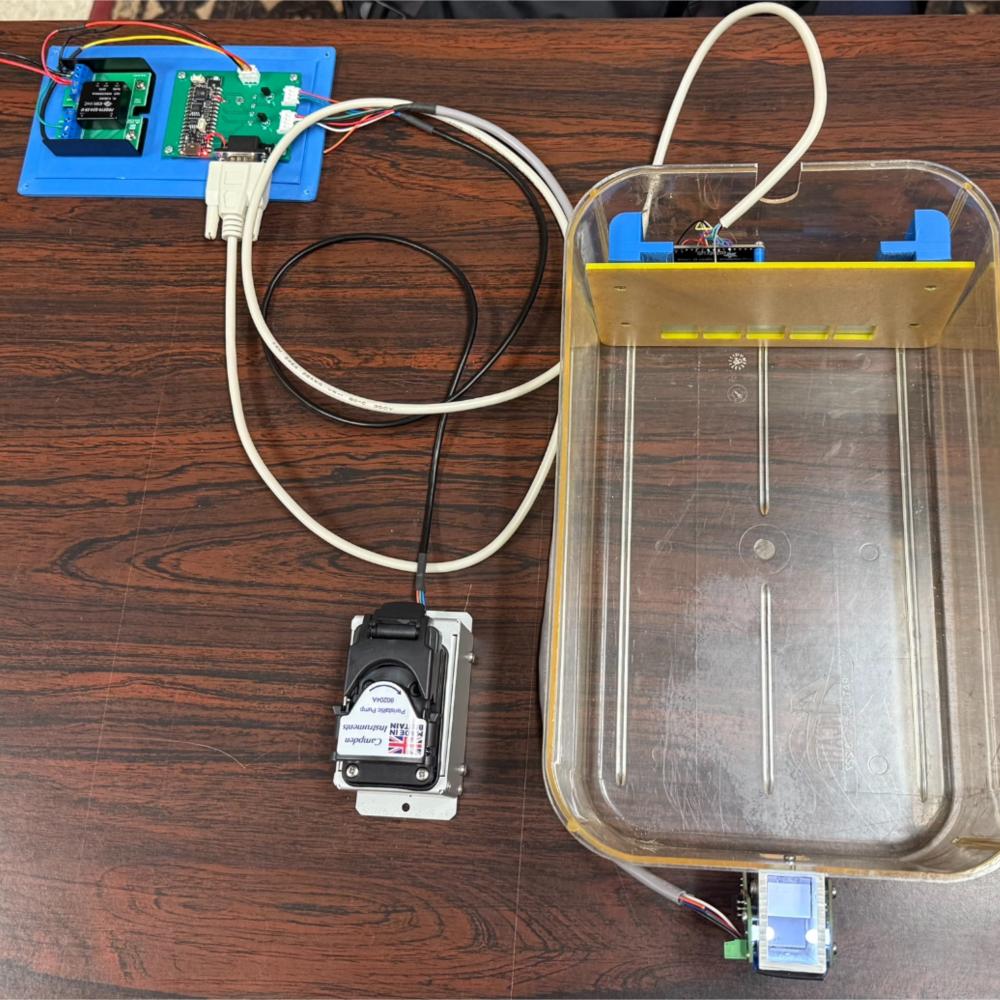
Our team is developing a portable urine analysis device to support ongoing clinical research led by our sponsor, Dr. Stephen Bickler, who is studying the relationship between cardiovascular function and nitric oxide levels in urban areas of Mozambique. The primary goal of the study is to understand why cardiovascular and cerebrovascular diseases, such as hypertension, which are rare in underdeveloped regions, increase in prevalence in urban environments.
Final design of the device

Venous Ulcer Wound Compression Garment

2024-2025 - Spring

Team: 27

Team Members

Zackery Adler
Victoria Birdsell
Kim Garbez
Maria Kolattukudy

Contact Team
Venous stasis ulcers are chronic open wounds that form due to poor blood circulation on the lower leg and can take months, or even years, to heal. Through combining leg compression and negative pressure wound therapy (NPWT), Dr. Caesar Anderson of the UC San Diego Wound Healing Center has seen high therapeutic success. The project goal was to design a device that accurately compresses the leg to a prescribed pressure and allows for the integration of NPWT.
Non-waterproof garment on white background

Genetically Modified Mosquito Incubation Box

2023-2024 - Spring

Team: 13

Team Members

Emily Inthavong
Emily Weiner
Keileina Honda
Matthew Amankonah
Samantha Stampfl

Contact Team
The goal of this project is to create a mosquito suppression box that allows for the development of genetically modified mosquito eggs so that the sterile male mosquitoes can easily exit the box while the flightless female mosquitoes are contained.
Black square plastic container with green lid

Single-Cell Microfluidic Chip Design and Fabrication

2023-2024 - Spring

Team: 8

Team Members

Conor Archdeacon
Theo Emery
Wesley Huszarik
Spencer Martin
Trevor Matthews

Contact Team
Microfluidics devices were designed and fabricated to study single cell interactions between coccidioidomycosis and neutrophil at large scales. High efficiency rates were reported, providing valuable data driven insight towards developing cost effective research tools and treatments for Valley Fever. Cell immobilization techniques were considered for extended time scale imaging.
A microfluidic chip shown as visible to the naked eye, and as seen with fluorescent microscopy imaging.